Coming Home to Bosnia and Herzegovina: A Travel Guide
A practical guide for the Bosnian diaspora: documents, packing, flights to Tuzla, car rental, driving tips and making the most of family time.
 KLS Auto team
Coming home. For millions of Bosnians and Herzegovinians living around the world, those two words carry a special meaning. Whether you live in Germany, Austria, Switzerland, Scandinavia or anywhere else, the feeling when your plane touches down in your homeland is indescribable. But between that moment and embracing your loved ones, there are practical arrangements that can become stressful if you are not well prepared.
Before departure — preparation that saves you stress
Good preparation makes the difference between a stressful journey and a relaxed one. Start organising your trip at least a few weeks before your planned departure date.
Documents — check their expiry dates
This may sound obvious, but you would be surprised how many people only realise their passport has expired when they start packing.
Passport:
Check your passport’s expiry date. Most countries require it to remain valid for at least 3–6 months after your planned return. If your passport is due to expire soon, renew it before booking flights — the process can take several weeks.
If you have dual citizenship, such as Bosnian and German, Austrian or Swiss citizenship, decide which passport you will use. In general, travelling with an EU passport is more convenient if you have one, as it simplifies airport procedures.
Children’s passports:
Children must have their own passports — they can no longer be included in a parent’s passport. If you have young children, check that their documents are valid. Remember that children grow quickly, and their passport photo may no longer look like them. Border officers may raise questions if a child’s appearance has changed considerably since the photo was taken.
Driving licence:
If you plan to drive in Bosnia and Herzegovina, you will need a valid driving licence. Licences issued in EU countries, Switzerland and most other European countries are valid in Bosnia and Herzegovina without additional formalities.
If you still have a Bosnian driving licence that you did not exchange when you moved abroad, check its status. Some older licences may no longer be valid or may have expired.
An international driving permit is generally not required for citizens of European countries, but it can be useful if your licence was issued outside Europe.
Health insurance:
Check whether the health insurance you have in your country of residence covers treatment in Bosnia and Herzegovina. Most European Health Insurance Cards (EHIC/CEHI) are not valid there because Bosnia and Herzegovina is not an EU member.
Consider buying travel medical insurance for your stay. These policies are relatively inexpensive, often 20–50 KM for a week, and can save you significant costs if you become ill or are injured.
Packing — less is more
The diaspora is known for arriving with enormous suitcases full of gifts for relatives. We understand the impulse: you want to bring something special for your loved ones. But too much luggage can create problems.
Airline restrictions:
Check your airline’s baggage allowance. Most low-cost airlines flying to Tuzla have strict limits, and excess baggage can be expensive — sometimes costing more than the ticket itself.
Typical limits:
Hand luggage: 8–10 kg
Checked baggage: 20–23 kg per suitcase
Excess baggage: 10–15 EUR per kilogram
Work out the costs beforehand. Sometimes it is cheaper to book an additional suitcase than to pay excess weight charges.
Smart packing:
Make a list of what you actually need to bring. Plan gifts for relatives around your baggage allowance. Clothes and toiletries can be bought in Bosnia and Herzegovina if needed, often at lower prices than in Western Europe.
Leave some space for the return journey. You know how it goes: bags of traditional Bosnian coffee, ajvar, fruit preserves, cured meat… They are hard to resist, and their weight adds up.
Medication:
If you take prescription medication, bring enough for your entire stay, plus a few extra days in case your return is delayed. Keep it in its original packaging with your name on the label.
You do not need to bring large supplies of everyday medicines for pain, colds or allergies. They are available in pharmacies in Bosnia and Herzegovina, often at lower prices.
Choosing your flight and airport
For most members of the diaspora living in Central Europe, Tuzla Airport in Dubrave is the most practical option. Here is what you should know.
Why Tuzla Airport?
Location:
Tuzla Airport is ideally located for anyone visiting northeastern Bosnia and the wider area. It is close to Tuzla and well connected to the whole region:
Tuzla: 20 minutes
Kalesija: 30 minutes
Lukavac, Gračanica, Živinice: 20–30 minutes
Brčko: 50 minutes
Bijeljina: 1 hour
Sarajevo: 1 hour 45 minutes
Zenica: 1 hour 30 minutes
For many families from Tuzla Canton and the surrounding regions, Tuzla is simply the nearest and most convenient option.
Low-cost airlines:
Tuzla Airport is a base for low-cost airlines, particularly Wizz Air. This means direct flights from numerous European cities at affordable prices:
Dortmund, Köln, Memmingen, Frankfurt-Hahn (Germany)
Vienna, Salzburg (Austria)
Basel, Zürich (Switzerland)
Malmö, Göteborg, Stockholm (Sweden)
Eindhoven (the Netherlands)
And many other destinations
Ticket prices can be exceptionally low, especially when booked in advance — sometimes below 50 EUR for a return flight.
Smaller and quicker:
Unlike large airports, Tuzla is compact and efficient. There are no long walks, complicated terminals or crowds at passport control. Getting from the aircraft to baggage collection usually takes 20–30 minutes.
Booking flights — money-saving tips
Book early:
Flight prices rise as the departure date approaches. For summer and holiday periods, book 2–3 months ahead. Keep an eye on prices, as airlines sometimes run promotions with substantial discounts.
Be flexible with dates:
If possible, avoid travelling on the main holiday dates, such as Eid, New Year or mid-August. Flights a day or two before or after the peak date are often considerably cheaper.
Midweek travel — Tuesday, Wednesday or Thursday — is usually cheaper than travelling at the weekend.
Compare your options:
Do not limit yourself to direct flights. A connecting flight can sometimes be much cheaper, particularly when several family members are travelling. Also check alternative airports, such as Sarajevo, Zagreb and Belgrade, if they offer better fares and you can arrange transport from there.
Departure day — how to reduce stress
Flying, especially with children, can be stressful. A few simple steps can make departure day much easier.
Arriving at the airport
How early to arrive:
For international flights departing from the EU, plan to arrive at least 2 hours before take-off. This gives you enough time for:
Check-in, if you have not checked in online
Bag drop
Security checks
Any unexpected delays
If you are travelling with young children or have special requirements, allow another 30 minutes.
Online check-in:
Most airlines offer online check-in 24–48 hours before departure. Use it: it saves time at the airport and secures your seat. If you are travelling as a family, online check-in allows you to choose seats together.
Travelling with children
Travelling with children takes extra preparation, but it does not have to be a nightmare.
Children’s hand luggage:
Pack a small backpack with things your children will need during the flight:
Snacks and drinks purchased after security
Favourite toys or books
A tablet or phone with downloaded films or games — and headphones!
A change of clothes in case of accidents
For babies: nappies, wet wipes, bottles and food
Ear pressure:
A little tip for parents: give children something to chew or suck during take-off and landing. Chewing gum, sweets or a dummy for babies help equalise pressure and prevent ear pain.
Keep their routine:
As far as possible, try to maintain normal sleeping and mealtime routines. A tired, hungry child is an unhappy child.
Arriving in Bosnia and Herzegovina — the first steps
The plane has landed, and the excitement is building. Here is what to expect and how to make everything go smoothly.
Passport control
Passport control at Tuzla Airport is usually quick and efficient. Have everyone’s passports ready. If a child is travelling with only one parent, the officer may ask for proof of the other parent’s consent. Have a certified consent document ready if required.
Citizens of Bosnia and Herzegovina use the lane for nationals, which is usually quicker. If you have dual citizenship, you can use your Bosnian passport to enter — this sometimes speeds things up.
Baggage collection
Tuzla Airport is small, so the wait for luggage is relatively short. Baggage belts are marked with flight numbers. If your luggage does not arrive, go straight to the airline’s desk in the hall. Do not leave the airport without filing a report.
Collecting your car — how it works with KLS Auto
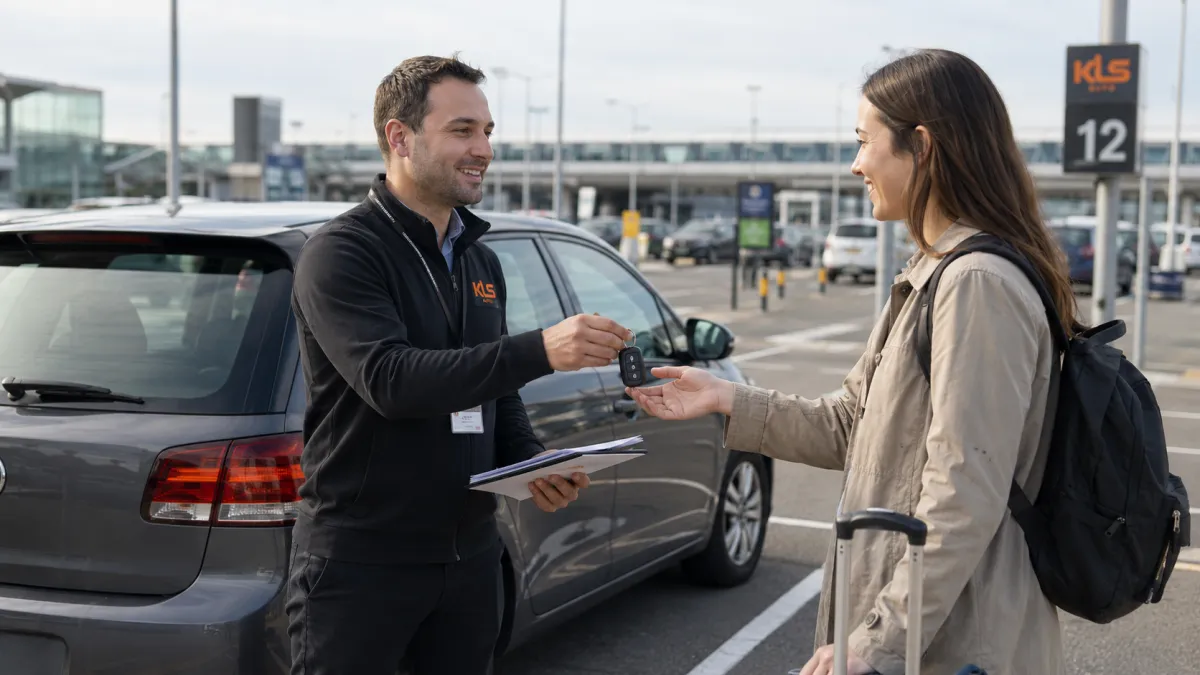
This is where your freedom to explore Bosnia and Herzegovina begins. At KLS Auto, we understand that after a long journey, you want to get to your family as quickly as possible. That is why we have made collection as simple as we can.
We meet you whatever time your flight lands:
Whether you land at noon or midnight, our staff will be waiting. We monitor flight arrivals, so if your flight is delayed, we know and adjust accordingly. You do not need to call us to report a delay — we are already informed.
Finding us:
Our representative will meet you outside the airport building with a sign displaying your name or the KLS Auto logo. We usually stand right beside the terminal exit, so you cannot miss us.
The collection process:
Collecting your car takes 10–15 minutes:
Completing a short rental agreement
Checking your documents — driving licence and ID card or passport
Walking around the vehicle and recording any existing damage
A brief introduction to the car, if needed
Paying the total rental amount in cash
Receiving the keys and vehicle documents
That is it — you are ready to go. No deposit, no funds blocked on your card and no complications. Simple and quick.
Getting around Bosnia and Herzegovina — practical tips
You now have the freedom to travel. Here are a few tips to help make driving in Bosnia and Herzegovina comfortable and safe.
Road conditions
The main roads in Bosnia and Herzegovina are generally in good condition. The A1 motorway connects Sarajevo with Zenica-Doboj Canton, while the section towards Tuzla is in the final stages of construction.
Regional roads vary: some are excellent, while others have damage. Drive carefully and adjust your speed to the road conditions.
Local roads in villages can be narrow and sometimes in poorer condition. If you are heading to your grandfather’s house in a village where you have not driven for a long time, take it slowly and be prepared for surprises.
Need a car for this trip? Check available cars and the price for your dates.
Book a carTraffic rules
The basic rules are the same as elsewhere in Europe:
Drive on the right
Seat belts are compulsory for all passengers
Using a mobile phone while driving is prohibited unless you use hands-free equipment
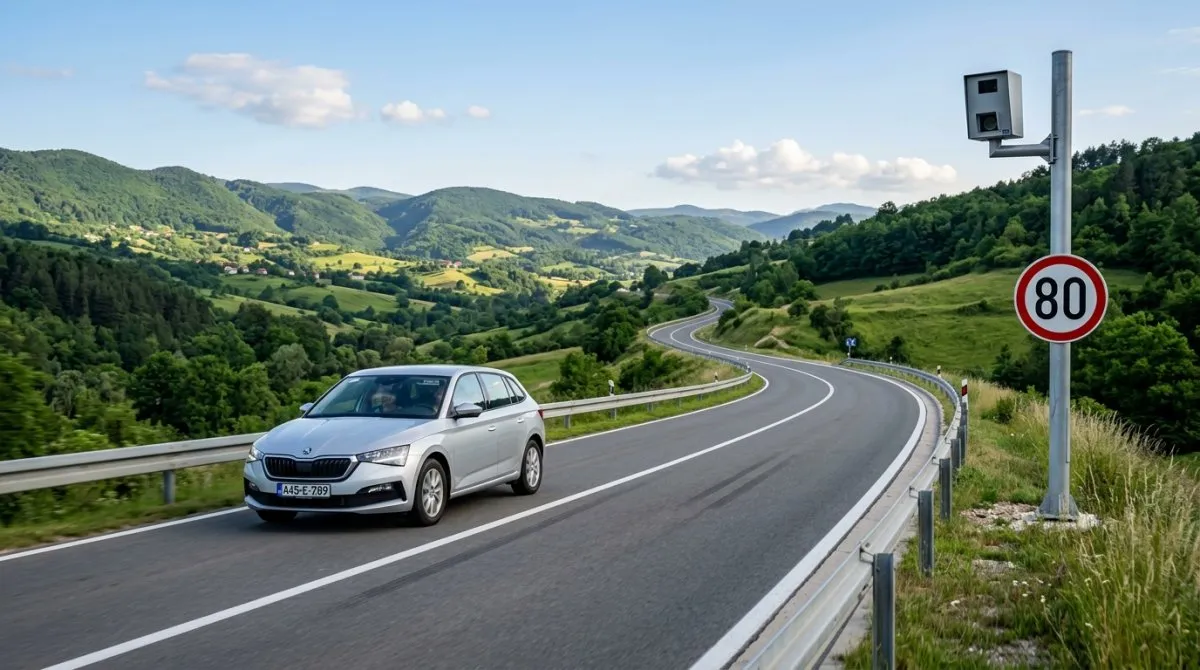
Speed limits: 50 km/h in built-up areas, 80 km/h outside built-up areas and 130 km/h on motorways
Zero tolerance for alcohol for drivers — the permitted level is 0.3‰, but our advice is simple: if you drive, do not drink
Fines in Bosnia and Herzegovina can be high, and the police are active, especially during summer and holiday periods when there are more vehicles on the roads.
Petrol stations
Petrol stations are available along all major roads. Most are open 24 hours a day, especially in larger towns. In smaller places, opening hours may be limited.
Most stations accept cash in KM and payment cards. Fuel prices are regulated and relatively consistent, although stations away from the main roads sometimes offer slightly lower prices.
Reliable chains in Bosnia and Herzegovina include Hifa, Nestro, Petrol and Ina. All offer standard-quality fuel.
Parking
In larger cities such as Tuzla, Sarajevo, Mostar and Zenica, city-centre parking is limited and chargeable. Zones are usually colour-coded — red, yellow and green — with different prices and maximum parking times.
Paying for parking:
Send an SMS to the displayed number — a local mobile number is required
Use a parking meter with coins
Use parking cards purchased at kiosks
Parking fines are issued regularly, and towing services operate actively in larger cities.
Navigation
Google Maps and Waze work very well in Bosnia and Herzegovina. If you have mobile data, navigation is straightforward. If you do not have local internet access, download offline maps before travelling; Google Maps offers this option.
Bear in mind that navigation apps sometimes suggest shortcuts along local roads that may be in poorer condition. For longer journeys, stick to the main roads even if the app suggests a shorter route through a village.
Practical tips for your stay
Mobile phones and internet
If you plan to use mobile data during your stay, you have several options:
Roaming:
Check your provider’s roaming terms. Depending on your plan, roaming in Bosnia and Herzegovina may be included or charged separately. Roaming charges can be high, particularly for data.
A local SIM card:
Buying a local prepaid SIM card is easy and inexpensive. The main operators in Bosnia and Herzegovina are BH Telecom, HT Eronet and m:tel. You can buy a SIM at kiosks, shops or the operator’s outlets.
You need an ID card or passport to activate it. A starter pack usually costs 5–10 KM, and mobile data packages are very affordable: 5–10 GB can cost just 10–15 KM.
Wi-Fi:
Most accommodation, restaurants and cafés in Bosnia and Herzegovina offer free Wi-Fi. If you only need occasional internet access, you may be able to avoid mobile data costs by relying on Wi-Fi.
Money and payments
Currency:
The official currency in Bosnia and Herzegovina is the convertible mark, abbreviated KM or BAM. Its exchange rate is fixed to the euro: 1 EUR = 1.95583 KM.
Cash machines:
Cash machines are available in all larger towns. Most accept international cards such as Visa and Mastercard. Withdrawal fees depend on your bank, so check the terms before travelling.
Card payments:
Card payments are increasingly common, particularly in larger cities and retail chains. However, always carry some cash: many small shops, markets, bakeries and cafés in smaller places accept cash only.
Currency exchange:
If you bring euros or another currency, you can exchange them at banks or exchange offices. The euro exchange rate is fixed, but rates for other currencies can vary. Avoid airport exchange offices, which usually offer less favourable rates.
Healthcare
If you need medical attention:
Emergencies:
The ambulance emergency number is 124. Emergency medical assistance is free for everyone, regardless of insurance.
Health centres and clinics:
For less urgent situations, you can visit a local health centre. If you do not have health insurance in Bosnia and Herzegovina, you will need to pay for the services, but prices are much lower than in Western Europe.
Pharmacies:
Pharmacies are widely available. Most medicines that require a prescription in the EU are available without one in Bosnia and Herzegovina. Pharmacy staff are usually highly knowledgeable and can offer advice on minor health problems.
Time with family — the reason you came
All these practical arrangements serve one purpose: giving you quality time with your loved ones. Here are a few tips for making the most of it.
Do not overload your schedule
A common mistake is trying to visit every relative, school friend and neighbour in two weeks while also seeing the tourist attractions. The result is exhaustion and the feeling that you have not really spent time anywhere.
Be realistic. Make a list of priorities: who you must see and who you could perhaps visit next time. Leave some days free for relaxing, spontaneous activities and unexpected reunions.
Let your children be part of the experience
If your children were born abroad, this trip is an opportunity for them to discover their roots. Show them where you went to school, where you played and where you used to meet your friends.
Include them in local activities: visiting the market, making pita with their grandmother or playing with neighbourhood children. These experiences are worth more than any souvenir.
Make the most of having a car
With your own vehicle, you have a freedom that public transport cannot offer. Make use of it:
Trips around the area:
You do not have to stay in one place. Set aside a day to visit a nearby mountain, lake or historic site. Bosnia and Herzegovina has many natural attractions and cultural landmarks that can be explored on day trips.
A few ideas for day trips from Tuzla:
Panonska jezera in Tuzla itself — ideal for a family day out
Srebrenik and its medieval fortress
Gradačac — the well-known town of corn and Husein-kapetanova kula
Bijeljina and the Stanišići ethno village
Mount Majevica for nature lovers
Flexibility:
Having a car lets you adapt your plans. If relatives spontaneously gather somewhere, you can join them. If the children become restless, you can take them on a short outing. If you discover an interesting place you did not know about, you can stop and explore.
Experiences not to miss
Every homecoming should include a few familiar rituals:
Traditional food:
Everyone in the diaspora dreams of food from home. Ćevapi, pita, begova čorba, klepe, hurmasice… Make time to enjoy the dishes that are unlike anything elsewhere. Let your children try the foods you grew up eating.
Coffee with the neighbours:
Bosnian coffee is more than a drink. It is a ritual, a way of spending time together and an opportunity to talk. Sit with older neighbours, listen to their stories and share your own. These moments are at the heart of coming home.
The market:
A visit to the local market is an experience supermarkets cannot replace. Fresh fruit and vegetables, homemade cheese and kajmak, honey and seasonal produce, all accompanied by bargaining and chatting with the sellers. For children growing up abroad, it is a whole new world.
Nature:
Bosnia and Herzegovina has incredible natural scenery that is often overlooked. Rivers, mountains, lakes and waterfalls are all within reach. Take the opportunity to spend time outdoors, especially if you live in a large city abroad.
The return journey — do not forget these steps
All good things come to an end. Here is how to make your return journey stress-free.
Returning the car
At KLS Auto, we offer flexible options for returning your vehicle:
Airport return:
This is the most common option. Drive to the airport, where we will be waiting, complete a quick handover and head to check-in. The process takes 5–10 minutes.
Plan to arrive at the airport an hour earlier than you normally would, giving yourself enough time to return the vehicle and check in.
Fuel:
Remember to fill the tank before returning the car. The nearest petrol station is just a few minutes from the airport. If you return the vehicle without a full tank, refuelling is charged at a higher rate. Avoid this unnecessary expense.
Packing for the return journey
If you are like most of our diaspora customers, your suitcase somehow ends up fuller on the way home than it was on arrival. Cured meat, kajmak, ajvar, homemade honey, coffee, juices, sweets…
Hand luggage restrictions:
Remember that liquids in containers larger than 100 ml are not permitted in hand luggage. Ajvar, honey and kajmak all need to go in your checked baggage.
Meat products:
Bringing meat products into the EU is restricted or prohibited. Check the current rules before packing cured meat or sudžuka, as they may be confiscated at the border.
Weight:
Once again, watch your airline’s baggage limits. Traditional products from Bosnia and Herzegovina can be heavy: glass containers, jars and vacuum-packed meat. It is easy to exceed your allowance.
Goodbye is not forever
However difficult it is to leave, remember that this will not be your last visit. With good planning and reliable transport partners, coming home can become a regular tradition rather than a stressful expedition.
At KLS Auto, we want transport to be the last thing you need to worry about. Our goal is simple: from stepping off the plane to arriving at your family’s home, everything should go smoothly.
Contact us
If you are planning a trip to Bosnia and Herzegovina and need reliable transport from Tuzla Airport, get in touch. You can contact us via:
+387 61 25 25 95
+387 61 26 26 15
WhatsApp: +387 61 25 25 95
Viber: +387 61 25 25 95
info@kls.ba
www.kls.ba
Book in advance to secure a vehicle for your arrival. We will be waiting at the airport, whatever time you land.
Welcome home.
Need a car for this trip?
Check available cars and the price for your dates.
Book a car Fleet and prices